Speakers & Subwoofers
Wharfedale Linton 85th Anniversary Review
source not recorded
source not recorded
source not recorded
Community verdict
A speaker people buy with their eyes and keep with their ears — gorgeous veneer, relaxed musical presentation, and genuine 3-way engineering at a midrange price. Go in knowing the 90dB badge is optimistic and the stands aren't optional, and it's one of the most satisfying music-first picks on this list.
Key sources: Erin's Audio Corner Linton measurements + spinorama.org; Hi-Fi Plus review; Rich's Record Emporium dealer review; Ayreborn listings (2026-09-20); Facebook group extraction (2026-09-20).
Price
(Observed 2026-09-20; pricing is volatile across US dealers.)
| Price | |
|---|---|
| US launch price (per Hi-Fi Plus) | $1,198/pair + $300 stands |
| Ayreborn (crawled 2026-09-20) | $2,199/pair (walnut out of stock); $2,699 with stands |
| Rich's Record Emporium (dealer review) | $1,799/pair including stands |
Trajectory: launched at $1,198; Sept 2026 US street looks elevated ($1,800–$2,200 with stands depending on dealer). Confirm a live quote — do not assume launch pricing.
The review
Wharfedale Linton 85th Anniversary Review
A speaker people buy with their eyes and keep with their ears — gorgeous real-wood veneer, relaxed musical presentation, genuine 3-way engineering. Just know you're paying for the veneer and the vibe as much as the engineering, and say so out loud.
The disclosure first, per this project's rules: the tentative list carried the ELAC Uni-Fi 2.0 UF52. Across every social-extraction file in this pass, zero ownership or recommendation evidence surfaced for the UF52, while the Linton was recommended by name in group threads. The Linton replaces the UF52 — nothing silently dropped, and the substitution itself is data: the community talks about the Linton; it doesn't talk about the UF52.
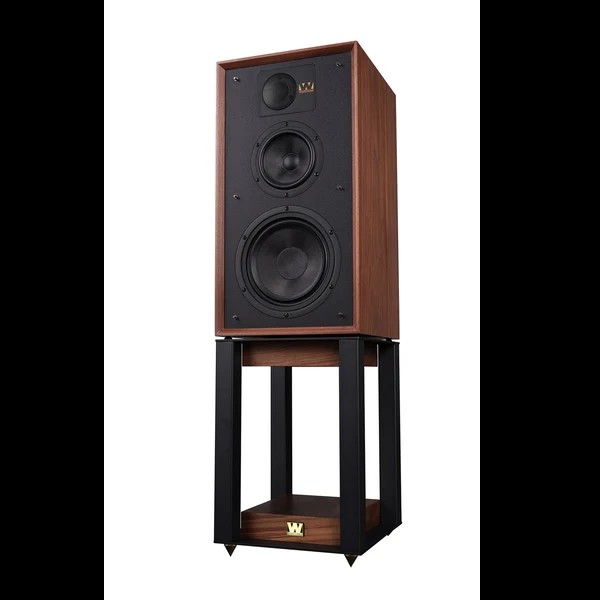
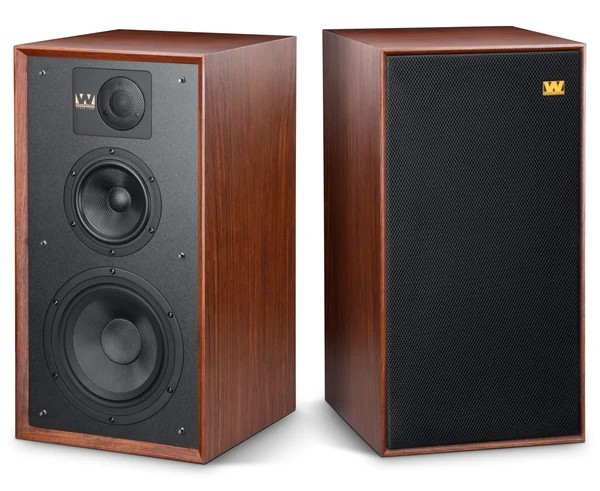
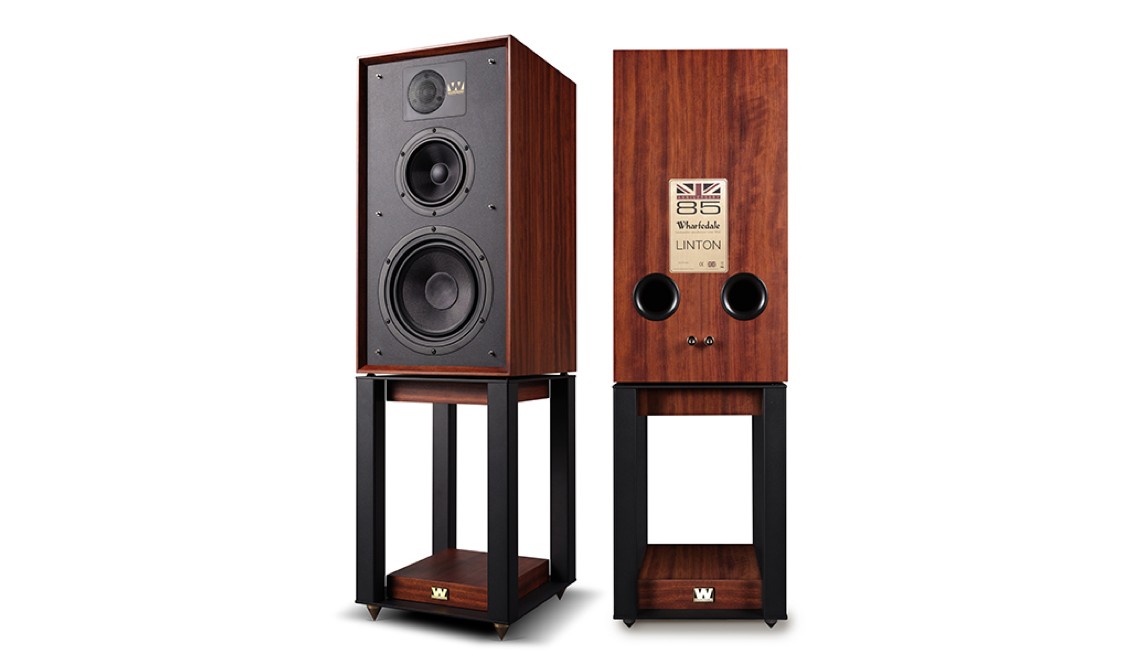
What it is: Wharfedale's Heritage-series 3-way standmount — an 8-inch woven Kevlar woofer, a 5-inch Kevlar midrange in its own sub-enclosure, and a 1-inch soft-dome tweeter, in a big cabinet with dual rear ports, sold as hand-matched mirror-image pairs. It's a lifestyle object that happens to be a serious speaker: the fit and finish are, in a dealer's words, "immediately impressive," with handling gloves and setup instructions in the box. Hi-Fi Plus called it, for many listeners, not only a high-end starting point but "a wonderful end-destination" — review press, labeled, but it captures the Linton's actual role: the speaker you stop upgrading.
What's genuinely good is the long-session listenability. This is a big, easy, relaxed presentation — the kind of speaker that plays all evening without fatigue, with real 3-way authority in the midrange that two-ways at this price can't fake. The veneer is genuinely beautiful — walnut, mahogany, black oak, matched pairs — and the unboxing experience (felt bags, sorbothane nodes, gloves) is part of what you're buying. The groups recommended it in low-power/efficiency contexts alongside KEF Q/R and Klipsch Heritage, and it measured respectably: Erin's Audio Corner scored it well, with a preference score that climbs further with a sub.
Now the honesty, because this speaker has the batch's most documented spec-sheet problem. Erin measured sensitivity at 85.1dB against the claimed 90dB — the brochure number does not survive the lab, stated plainly. That 5dB gap is the difference between "easy to drive" and "plan your amp accordingly": the 3.5Ω minimum still wants current, and the 25–200W range should be read from the top half. The stands are strongly recommended and cost ~$300 — 40.5-pound speakers need them, and they're voiced with stand height in mind, so the real system price is stands-in, not stands-optional. The dual rear ports punish close-to-wall placement; Hi-Fi Plus's setup tips (well off the back wall, generous toe-in, grilles on) are requirements, not suggestions. And the pricing is volatile: launched at $1,198/pair, September 2026 US street looked like $1,800–$2,200 with stands depending on dealer — do not assume launch pricing, and get a live quote.
Who should skip it: close-to-wall listeners — the dual rear ports will boom against the boundary. Buyers who need the 90dB badge to be true — it isn't; bring a real amp. And anyone who resents paying for furniture: part of this price is the veneer and the vibe, and if that bothers you, the honesty is that it should.
The social pulse, in one paragraph: recommended in the efficiency threads, measured honestly in the lab, thinner on direct owner writeups than the SVS and Klipsch picks — Tier 2, stated openly. Threads and Instagram are absent. The romantic pick mostly survives scrutiny: the measurement record knocks the sensitivity claim down without knocking the speaker down, and the community's affection is for the whole package — looks, ease, longevity. Nobody's reporting failures; the debates are about price and placement.
Value call: $1,198 launch vs $1,800–$2,200 street with stands in Sept 2026 — volatile, verify live. One dealer showed $1,799/pair including stands; another $2,199 without (walnut out of stock) and $2,699 with. At $1,800 with stands it's a satisfying music-first purchase; at $2,700 you're paying scarcity. Against the Polk R700's promo pricing, the Linton is the music-room romantic to the Polk's theater-room brawler.
Buy it for the veneer, the ease, and the long evenings. Budget the stands, bring a real amp, keep it off the wall — and go in with eyes open about what the 90dB badge is worth.
Prices and claims observed 2026-09-20; re-verify live before purchase.