Projector Screens
Stewart Filmscreen StudioTek 100 — reference unity-gain screen
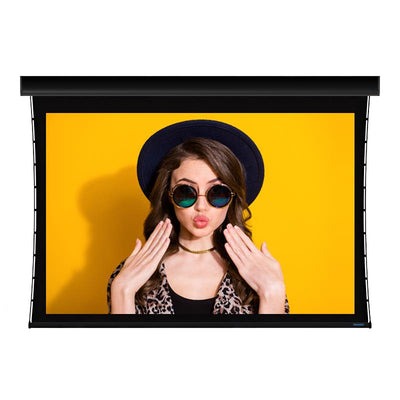
source: focusedtechnology.com dealer listing; PNG→JPEG converted

source: stewartfilmscreen.com
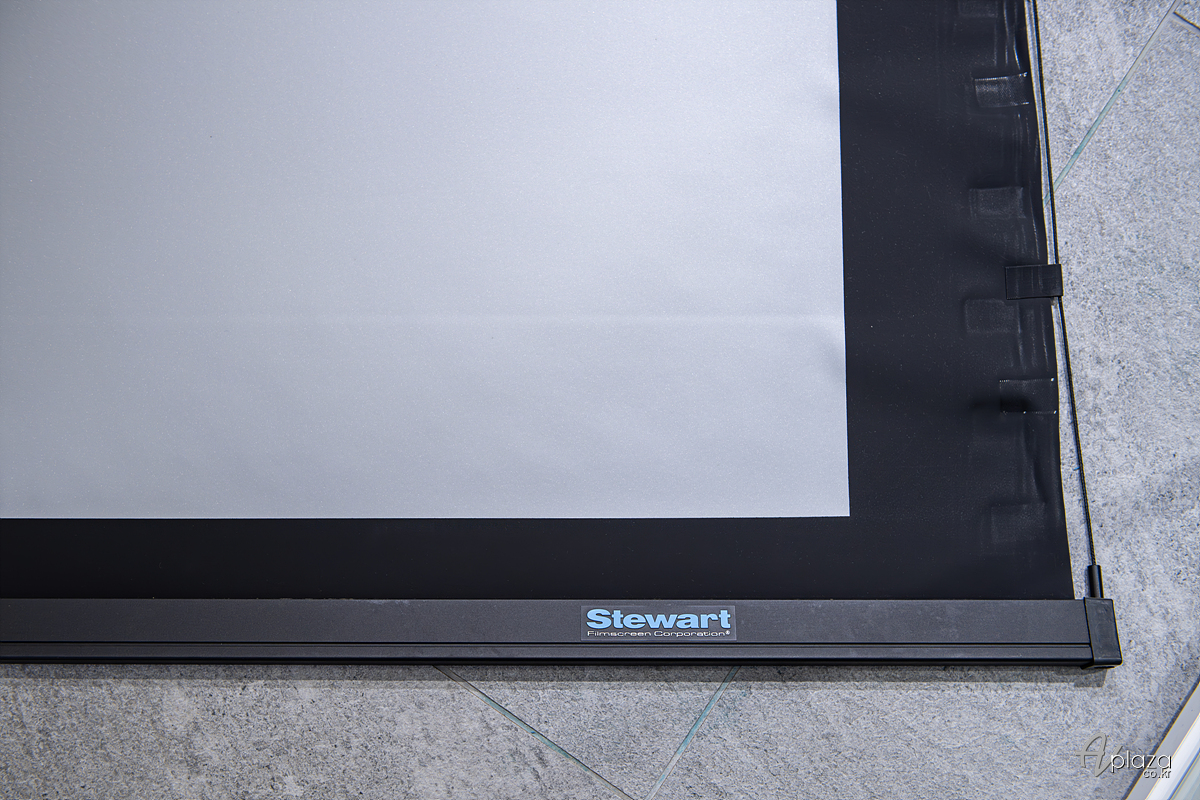
source: avplaza.co.kr dealer listing
Community verdict
StudioTek 100 is the screen the enthusiast community measures everything against and mostly doesn't buy — the post-production reference standard, recommended by Stewart itself for the most cinematic dark-room image, undercut in real living rooms by owners who want the extra kick of the 1.3 gain. If your room is a batcave and your projector is serious, this is the endgame material; everyone else should read the price, nod respectfully, and buy accordingly.
Price
| Claim | Value | Source + date |
|---|---|---|
| WallScreen 2.5 fixed 120″ 2.35:1 StudioTek 100 | $3,168.31 — ships from manufacturer in 2–3 weeks, free shipping | projectorscreen.com (crawled ~June 2026 — aging, re-verify) |
| WallScreen 2.5 fixed 120″ 2.35:1 StudioTek 100 Perf (acoustic) | $4,633.56 | projectorscreen.com (crawled ~Dec 2025 — stale, historical only) |
| WallScreen 2.5 fixed 125″ 2.40:1 StudioTek 100 | $3,216.20 | projectorscreen.com (crawled ~Jan 2026 — aging, re-verify) |
| Visionary retractable StudioTek 100 (MT3 Medio size) | Base MSRP $4,467 (USA) | stewartfilmscreen.com Visionary data sheet |
| Street/used | UNVERIFIED — Stewart is dealer-sold; street pricing is opaque by design | — |
The full dossier
Research date: 2026-09-20 | Category: Projector screen (reference matte-white, fixed frame / electric / masking systems) | Status: current — verified real, in production and on sale in 2026
1. Overview
StudioTek 100 is Stewart Filmscreen's (Torrance, CA) unity-gain (1.0) matte-white reference material — the screen Hollywood post-production and color-timing facilities use as their standard. It is not an ALR product and makes no pretense of fighting ambient light: it's a full-Lambertian diffuser built for dark, dedicated theaters where accuracy matters more than brightness tricks. Stewart sells it across fixed-frame (WallScreen 2.5), electric (Cabaret), and masking systems (Director's Choice, Luxus) through a dealer network at prices an order of magnitude above the value tier.
2. Social standing
Platforms: Facebook groups (organic technical discussion, March–May 2026), Instagram (Projector Central CEDIA 2026 coverage — press).
Community layer (organic): The standout is a March 23, 2026 ProjectorCentral User Group thread where Vincent Ristagno asked the group to adjudicate StudioTek 100 vs StudioTek 130 (1.3 gain) for a 140″ screen with an Epson QB1000. The thread is the enthusiast community at its best: nit calculations, the 300-nit HDR target, and a notable intervention — "Stewart recommends the 1.0 screen that's why I'm asking. I'm feeling like the 1.3 myself" — with an Epson employee citing consultation with Stewart's VP of Sales backing the 1.3 for extra brightness. Owner consensus leaned 1.3 ("i have seen both and the 1.3 is amazing, hard to go backwards"), while Stewart's official line is that 1.0 is "the most cinematic experience in a dark dedicated room." In a May 4, 2026 thread, another member was told "Stewart Filmscreen has a StudioTek 100, 1.0 gain and very color accurate" — but balked that it "costs more than the projector." That price reaction is the community's honest verdict on Stewart: aspirational, not default.
Press layer: Projector Central's CEDIA Expo 2026 (Denver, Sept 18, 2026) coverage showed Stewart's new Director's Choice Generation 2 masking system using StudioTek 130 MicroPerf with Epson's QL7000 — Stewart remains the CI channel's screen of choice.
Bug history owned openly: No failure-mode discussion surfaced — at this price and through dealers, problems are handled privately. The honest caveat is physics: 1.0 gain needs real lumens and a dark room; buyers chasing HDR brightness on big screens keep drifting to the 1.3 gain.
Consensus verdict: the reference standard you buy when the theater is already right — dark room, capable projector, dealer installation. The community respects it enormously and mostly buys something cheaper.
3. Key specs table
| Spec | StudioTek 100 | Source |
|---|---|---|
| Material | Flexible front-projection matte white, unity gain | stewartfilmscreen.com / projectorscreen.com |
| Gain | 1.0 (peak); full Lambertian diffuser — brightness virtually unchanged off-axis | projectorscreen.com (Sept 2026) |
| ALR | ~15% ambient light rejection value — not an ALR screen | projectorscreen.com |
| Throw | No minimum throw distance | projectorscreen.com |
| Max size | 40′ × 90′ | stewartfilmscreen.com |
| Lay-flat quality | Excellent | projectorscreen.com |
| Flame resistance | Yes | projectorscreen.com |
| Perforation | MicroPerf X2 / CinemaPerf / THX Ultra options (acoustic transparency) | stewartfilmscreen.com |
| Systems | WallScreen 2.5 (fixed), Cabaret (electric), Luxus, Director's Choice (masking) | stewartfilmscreen.com |
| Resolution | Rated to 16K / 4K / 8K | projectorscreen.com |
4. Pricing (observed 2026-09-20 — re-verify live before buying)
| Claim | Value | Source + date |
|---|---|---|
| WallScreen 2.5 fixed 120″ 2.35:1 StudioTek 100 | $3,168.31 — ships from manufacturer in 2–3 weeks, free shipping | projectorscreen.com (crawled ~June 2026 — aging, re-verify) |
| WallScreen 2.5 fixed 120″ 2.35:1 StudioTek 100 Perf (acoustic) | $4,633.56 | projectorscreen.com (crawled ~Dec 2025 — stale, historical only) |
| WallScreen 2.5 fixed 125″ 2.40:1 StudioTek 100 | $3,216.20 | projectorscreen.com (crawled ~Jan 2026 — aging, re-verify) |
| Visionary retractable StudioTek 100 (MT3 Medio size) | Base MSRP $4,467 (USA) | stewartfilmscreen.com Visionary data sheet |
| Street/used | UNVERIFIED — Stewart is dealer-sold; street pricing is opaque by design | — |
5. What's included / what's needed
- In the box: made-to-order screen system (frame or electric case + StudioTek 100 material), mounting hardware. (Exact box contents vary by system — UNVERIFIED per SKU.)
- Needed: a truly dark, dedicated room (this material has no ambient-light help to give); a bright, color-accurate projector (the FB consensus: pair with enough lumens or step up to StudioTek 130 for HDR pop); a dealer or experienced installer for the larger/masking systems; a budget where the screen can cost more than the projector — because it will.
6. Support reality
- Warranty: Stewart's warranty terms UNVERIFIED in this sweep — dealer-sold with manufacturer backing; do not quote terms without checking stewartfilmscreen.com.
- Service reputation: Sold through authorized dealers (ProjectorScreen.com is one) with 2–3 week build times — the CI-channel model. One dealer-site owner review: "The screen is not the bottleneck for at least 20 years... Do not compromise on a screen, and this has no compromises." No 2026 RMA stories surfaced either way.
- Owner guidance: decide 100 vs 130 gain before ordering (the community's eternal debate); consider MicroPerf if speakers live behind the screen; buy through a dealer, not grey market.
7. Community verdict
StudioTek 100 is the screen the enthusiast community measures everything against and mostly doesn't buy — the post-production reference standard, recommended by Stewart itself for the most cinematic dark-room image, undercut in real living rooms by owners who want the extra kick of the 1.3 gain. If your room is a batcave and your projector is serious, this is the endgame material; everyone else should read the price, nod respectfully, and buy accordingly.
Images
screen-stewart-studiotek-100-1.jpg— Stewart Luxus with StudioTek 100 MicroPerf (source: focusedtechnology.com dealer listing; PNG→JPEG converted)screen-stewart-studiotek-100-2.jpg— Stewart WallScreen official product image (source: stewartfilmscreen.com)screen-stewart-studiotek-100-3.jpg— Stewart screen product photo (source: avplaza.co.kr dealer listing)
The review
Stewart Filmscreen StudioTek 100 Review
The reference standard the enthusiast community measures everything against and mostly doesn't buy — because, as one owner put it, it "costs more than the projector."
That price reaction is the community's honest verdict on Stewart, and it surfaced in a May 2026 projector-group thread where a member was told "Stewart Filmscreen has a StudioTek 100, 1.0 gain and very color accurate" — and balked at the number. He's not wrong to balk. A 120" 2.35:1 WallScreen 2.5 in StudioTek 100 was listed at $3,168.31 (June 2026 listing — aging, re-verify). The acoustic MicroPerf version was $4,633.56 (December 2025 — stale, historical). Stewart sells through dealers, builds to order in 2–3 weeks, and prices like the post-production reference it is — because it literally is: StudioTek 100 is the unity-gain matte-white material Hollywood color-timing facilities use as their standard.
What it is: a 1.0-gain, full-Lambertian-diffuser matte-white screen — no ambient-light tricks, no gain hotspotting, brightness virtually unchanged off-axis — sold across fixed-frame (WallScreen 2.5), electric (Cabaret), and masking systems (Director's Choice, Luxus), with MicroPerf, CinemaPerf, and THX Ultra acoustic-transparency options. It is not an ALR screen: ~15% ambient light rejection, per dealer specs. Buy it for accuracy, not for fighting the sun.
What's genuinely good is everything the reference label implies. Unity gain means the image is the projector's image — no gain curve reshaping the calibration, which is why the post-production world standardizes on it. The Lambertian diffusion means the whole couch sees the same picture; no sweet spot, no falloff at the ends. The MicroPerf options are genuinely best-in-class for acoustically transparent screens — speakers behind the screen without the moiré and artifacts of cheap perfs. And the dealer channel is a feature at this price: made-to-order, proper installation support, a screen one dealer-site owner described as "not the bottleneck for at least 20 years... Do not compromise on a screen, and this has no compromises." Twenty years is the honest ownership horizon here — this is a buy-once material.
Now the other side, and the enthusiast community states it better than any reviewer could. In the March 2026 StudioTek 100 vs 130 thread — nit calculations, the 300-nit HDR target, the works — owner consensus leaned toward the 1.3 gain ("i have seen both and the 1.3 is amazing, hard to go backwards"), while Stewart's official line holds that 1.0 is "the most cinematic experience in a dark dedicated room." The physics behind the debate: 1.0 gain needs real lumens, and buyers chasing HDR brightness on big screens keep drifting to the 1.3. An Epson employee in the thread cited consultation with Stewart's own VP of Sales backing the 1.3 for extra brightness — when the manufacturer's sales VP concedes the brighter material, believe him. The honest caveat is that the 100 is the purist's choice and the 130 is the enthusiast's choice, and most enthusiasts choose brightness. The pricing is opaque by design — dealer-sold, no street market, used data UNVERIFIED. The warranty terms are UNVERIFIED in this sweep. And there's no failure-mode discussion at all — at this price through dealers, problems are handled privately, which means the review can't tell you what goes wrong, only that you won't read about it publicly.
Who should skip it: bright-room buyers — ~15% ALR is not ambient-light rejection in any meaningful sense; this material needs a batcave. Budget builders — the screen costing more than the projector is a real quote from a real thread, and it's disqualifying for most. UST owners in living rooms — a matte-white screen wastes a UST's contrast; the lenticular screens exist for that job. And HDR-brightness chasers on big screens: read the 100-vs-130 thread and consider the 130.
The social pulse, in one paragraph: enormous respect, minimal ownership — the projector groups discuss StudioTek 100 the way car forums discuss a reference engine: technically, admiringly, and from a distance. The March 2026 thread is the enthusiast community at its best, and its verdict is the review's verdict: the reference for dark rooms, undercut in practice by the 1.3 gain. CEDIA 2026 press (Projector Central, September) showed Stewart's new Director's Choice Generation 2 masking system running StudioTek 130 MicroPerf with Epson's QL7000 — the CI channel's screen of choice, still. Nobody's arguing about whether it's good. They're arguing about whether they can justify it.
Value call: there isn't one in the normal sense. $3,168 for a 120" fixed frame (aging quote), $4,467 base MSRP for the Visionary retractable, dealer pricing opaque — the value proposition is twenty years of reference image, not dollars per inch. Against the Silver Ticket at $280, it's 11× the money for the last 5% of accuracy and the dealer experience. That's not a ripoff; it's a different market.
If your room is a batcave and your projector is serious, this is the endgame material. Everyone else should read the price, nod respectfully, and buy accordingly.
Prices and claims observed 2026-09-20; re-verify live before purchase.