Mid-range Mini-LED TVs
Hisense U8Q / U8QG — Mid-Range Mini-LED TV (2025, current U8 series) — review
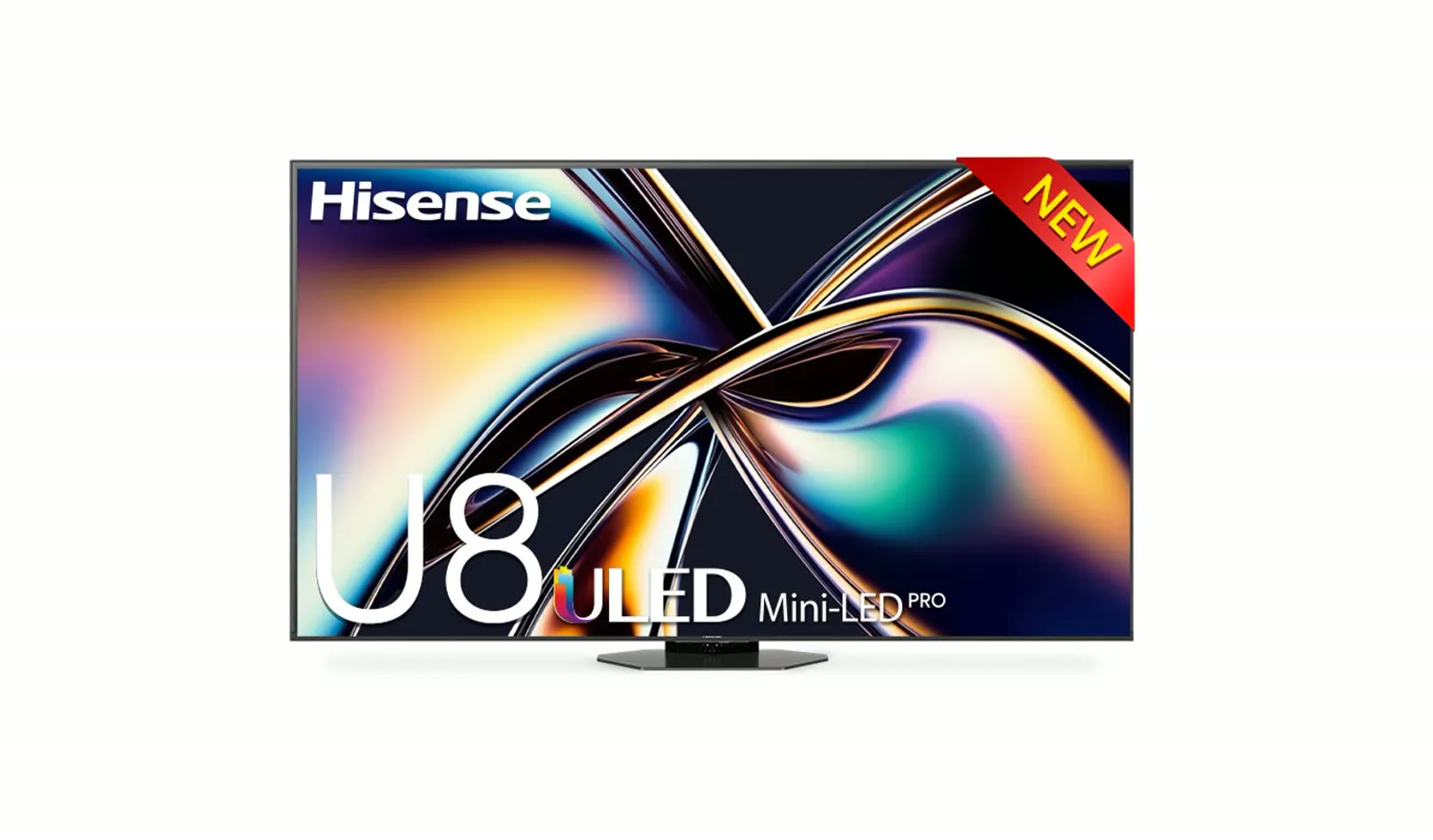
source: harveynorman.com.sg
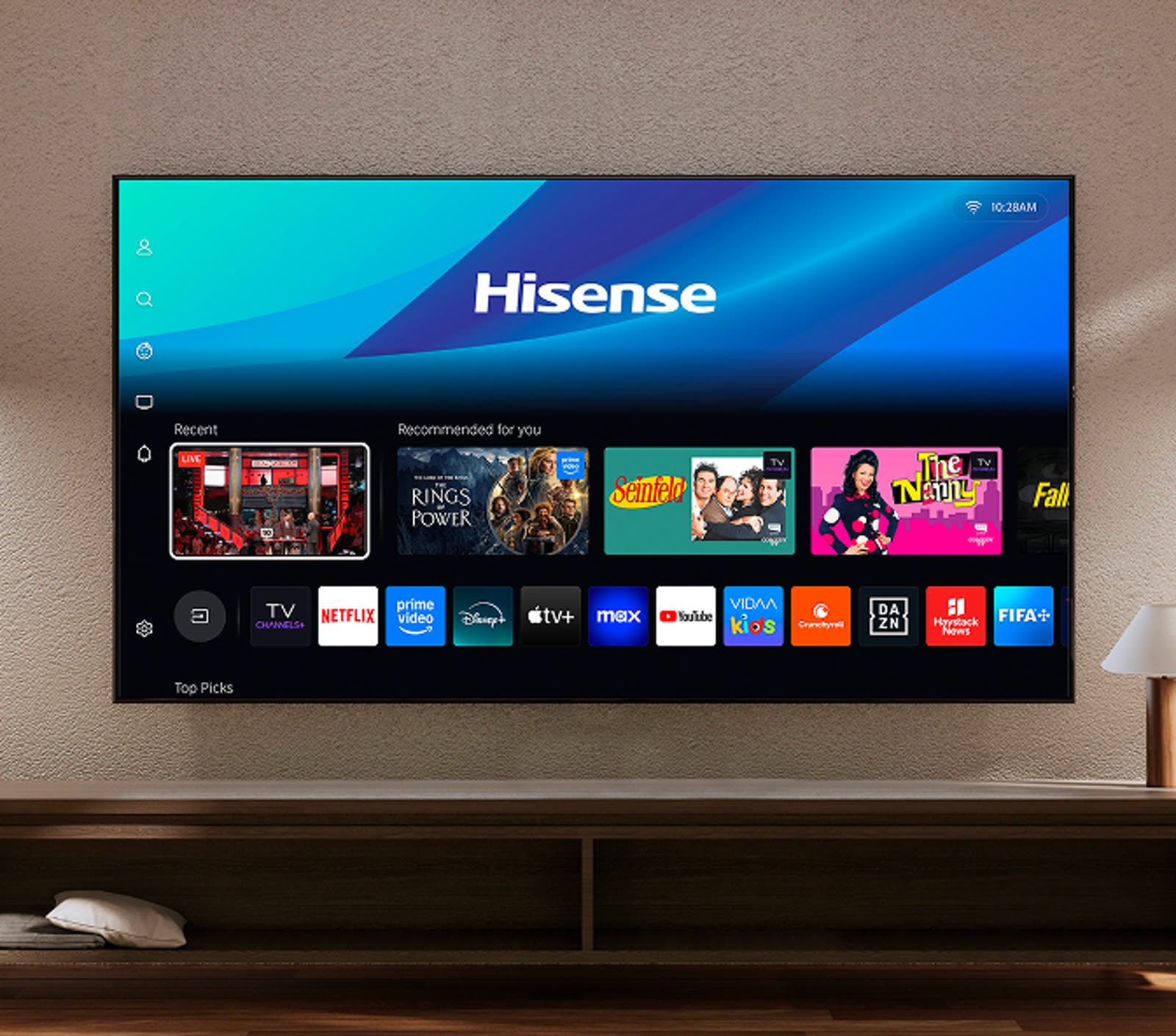
source: hisenseme.com
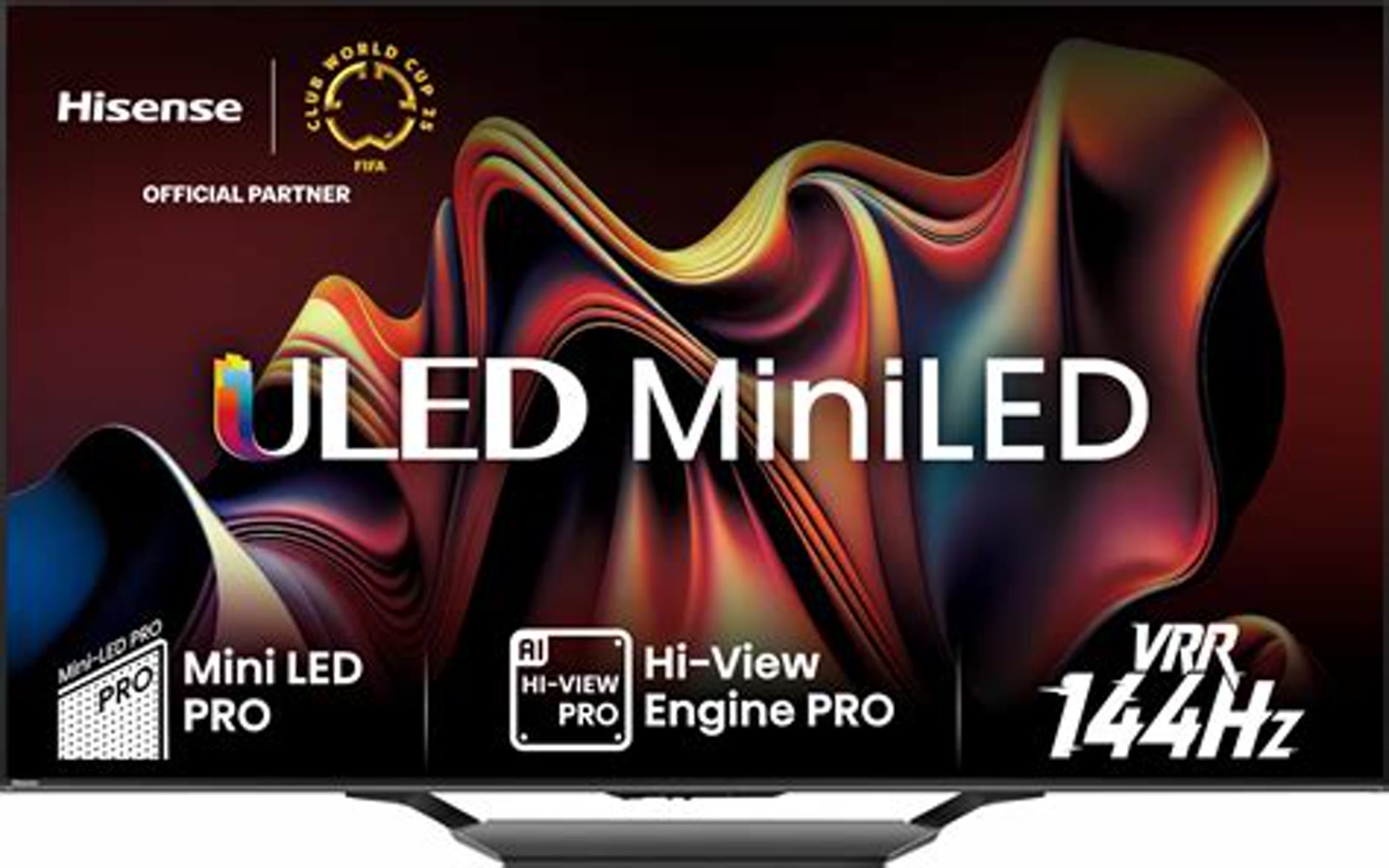
source: shoppinder.com
Community verdict
The U8Q/U8QG is the value pick the reviewers keep recommending — 2,000+ dimming zones, 165Hz gaming, Dolby Vision + HDR10+ at prices that have collapsed to under $1,000 for the 65" — and Best Buy owner sentiment skews genuinely positive on picture and gaming. But the social record is polarized rather than settled: there is no owner community to normalize expectations, and the loudest critics cite panel defects, CEC/lip-sync gremlins, and support friction. Buy at a discount from a retailer with easy returns, test the panel hard in the return window, and the 2-year warranty is your real backstop.
Price
(Observed 2026-09-20; re-verify live — prices have fallen steeply since launch.)
| Size | Launch MSRP (US) | Current street (Sept 2026) |
|---|---|---|
| 55" | UNVERIFIED | $727.99 — Amazon/Best Buy deal reported 2026-09-19 (via thevergetoday.pages.dev — secondary/scraped source, treat cautiously) |
| 65" | ~$1,499.99 (Digital Trends deal coverage: "usual $1,500," ~Aug 2026) | $850 at Best Buy, $650 off (Digital Trends, ~Aug 2026); $949.99 Amazon/Best Buy (secondary source, 2026-09-19); $799.96 at Walmart (slickdeals, April 2026); open-box from ~$495 (Fair) / $540 (Good) / $585–$763 (Excellent) (slickdeals/Best Buy, July–Sept 2026) |
| 75" | UNVERIFIED | ~$1,684 (us.smartprix.com, Sept 2026 — aggregator, re-verify) |
| 85" | UNVERIFIED | UNVERIFIED current US street price |
UK pricing (Currys, prices crawled ~July 2026): 55" £899 (was £1,199), 65" £1,099 (was £1,299), 85" £2,295 — all with Currys 5-year guarantee. Re-verify live.
Trajectory: the U8QG has been on near-continuous discount since early 2026 — never pay launch MSRP.
The review
Nobody in the TV world is neutral about Hisense. Post a question about the U8Q in any home-theater group and you'll get two answers at full volume. One side waves the spec sheet and screams brightness kings — 165Hz, two thousand-plus dimming zones, Dolby Vision, for what Sony charges for a parking spot. The other side posts a photo of a giant purple blob in the middle of the screen and writes two words: "cheap for a reason." Here's the thing — both camps are citing real evidence. That's what makes this TV so hard to review without picking a side first, and why I won't pretend there's a tidy answer.
The set is the U8QG in the US (U8Q in Europe), a 2025 model that's still Hisense's current U8-series Mini-LED as of fall 2026 — the company replaced its top conventional line with RGB-backlight sets instead. The 65" — the size most people should look at — uses a VA panel. Other sizes have conflicting reports of IPS-type panels, which would be weaker, so verify your size before you pay. That's not a footnote; it's the kind of detail that decides whether the picture you get matches the reviews.
And the reviews are glowing. TechRadar called it a "fantastically bright picture" with top-tier gaming and excellent value. What Hi-Fi? found "massive brightness, often great backlight control and vivid colours." T3 went full hype mode: "bright OLED competitor." Best Buy owner sentiment backs them up — excellent picture, noticeable brightness, excellent black levels, "top-notch refresh rate and great gaming performance." On the social side, an 85" U8N dedicated-theater build in the Home Theater on Any budget group pulled 36 comments and 239 reactions, and one Threads commenter in Spanish summed up the believers: "the 2024 Hisense U8 series is amazing and super cheap." Another said his Hisense has run five years "with no issues whatsoever."
Then there's the other camp. The single most detailed failure report in the whole research sweep came from a Threads owner whose Hisense Mini-LED developed "a giant purple spot that appeared in the middle of the screen for no reason," paired with "the worst hdmi cec I've ever seen," lip-sync issues with his soundbar, and brightness that "degraded significantly in only 3 years of normal usage." His verdict: "They're cheap for a reason." Facebook public chatter carries recurring reliability and service warnings, and Hisense's social signal comes with considerable sponsored/retailer/resale noise — the kind of buzz that isn't quite real people. There's no dedicated Hisense owner group (TCL has a 695-member one), so there's no community hub to normalize expectations or share fixes.
The press reviews name concrete cons too, and they're all real. Only three HDMI 2.1 ports — TechRadar lists it as a con, and if you've got a PS5, an Xbox, a soundbar, and an Apple TV, you're already out of room. Off-axis viewing is average, so wide seating arrangements suffer. And the built-in subwoofer rattles and distorts on heavy bass; action-movie fans need a soundbar. The headline brightness number — up to 5,000 nits per Hisense, 4,000 per T3 — is conflicting brand claims with no independent figure verified, so treat it as marketing weather, not fact.
Here's the social pulse in one paragraph: polarized, not settled. The professional reviewers are almost uniformly enthusiastic about the picture-per-dollar, and the Best Buy owners who bothered to review skew positive too. But independent owner depth is thin, the loudest critics cite specific defects and support friction, and a lot of the brand's social volume is ad-shaped. Hisense is the lightning rod of TV talk — the best-value hero and the most hated brand, sometimes in the same thread.
Now the value call. The 65" launched around $1,499.99 and has been on near-continuous discount since early 2026 — street price around $850–950 at Best Buy and Amazon as of September 2026, with open-box units from ~$495. Never pay launch MSRP; this TV lives on sale. At those prices it's genuinely hard to match on paper: 165Hz, 2,048 dimming zones on the 65", Dolby Vision and HDR10+, ATSC 3.0, Wi-Fi 6E. The nearest community alternatives sit in different lanes — the TCL QM7K owns the sub-$700 conversation, the Hisense U7 covers the 2026 budget tier — but nothing else puts this spec list this cheap. The 2-year warranty (longer than Sony's or TCL's one year) is your real backstop, though exact US terms were UNVERIFIED, so confirm before you buy. UK buyers get Currys' bundled 5-year guarantee, which materially changes the math.
Who should skip it: anyone with four HDMI devices (count yours — it's always more than you think), anyone with wide seating who cares about off-axis quality, anyone who wants to buy once and never think about their TV again, and anyone who'd lose sleep over warranty roulette. If a soundbar isn't in your budget, the rattling bass will bug you within a month.
So here's when the U8Q makes sense, honestly: bright room, main seats straight on, bought at a deep discount from a retailer with easy returns, and you run it hard through every test you can think of during the return window. Test the panel for spots, CEC with your actual gear, and the brightness modes you'll actually use. If it survives that gauntlet, you've bought one of the best price-to-picture ratios in the Mini-LED market. If the thought of that gauntlet sounds exhausting, you've just told yourself everything you need to know.