RGB Mini-LED: The Backlight Revolution of 2026
Prices and claims observed September 20, 2026. Re-verify live before buying.
Type "OLED killer" into YouTube in 2026 and you'll drown in thumbnails. The product behind most of them is RGB Mini-LED — the first genuinely new backlight architecture in a decade — and the claims attached to it are enormous: 5,000 nits, 110% of BT.2020, OLED-rivaling blacks with triple the brightness. Hisense, TCL, Samsung, and Sony all shipped RGB-backlit flagships this year, and the enthusiast press is openly asking whether Sony has "finally created an LCD that can genuinely challenge OLED" (Digital Trends, on the Bravia 9 II).
So: real revolution, or the year's best-marketed incremental step? Having read the reviews, the owner threads, and the spec sheets with a skeptical eye, here's the grounded version.
What RGB Mini-LED actually is
Every LCD TV ever sold has had the same fundamental compromise: a backlight shining through color filters. Conventional Mini-LED — the tech in last year's TCL QM8K, Samsung's Neo QLEDs, Sony's 2024 Bravia 9 — uses thousands of tiny white or blue LEDs behind the panel, dimmed in zones, with a quantum-dot film converting the light into colors. It's a brilliant kludge. It's still a kludge: white light forced through filters wastes energy and desaturates color at high brightness, which is exactly why Mini-LED has always lost the color-volume argument to OLED.
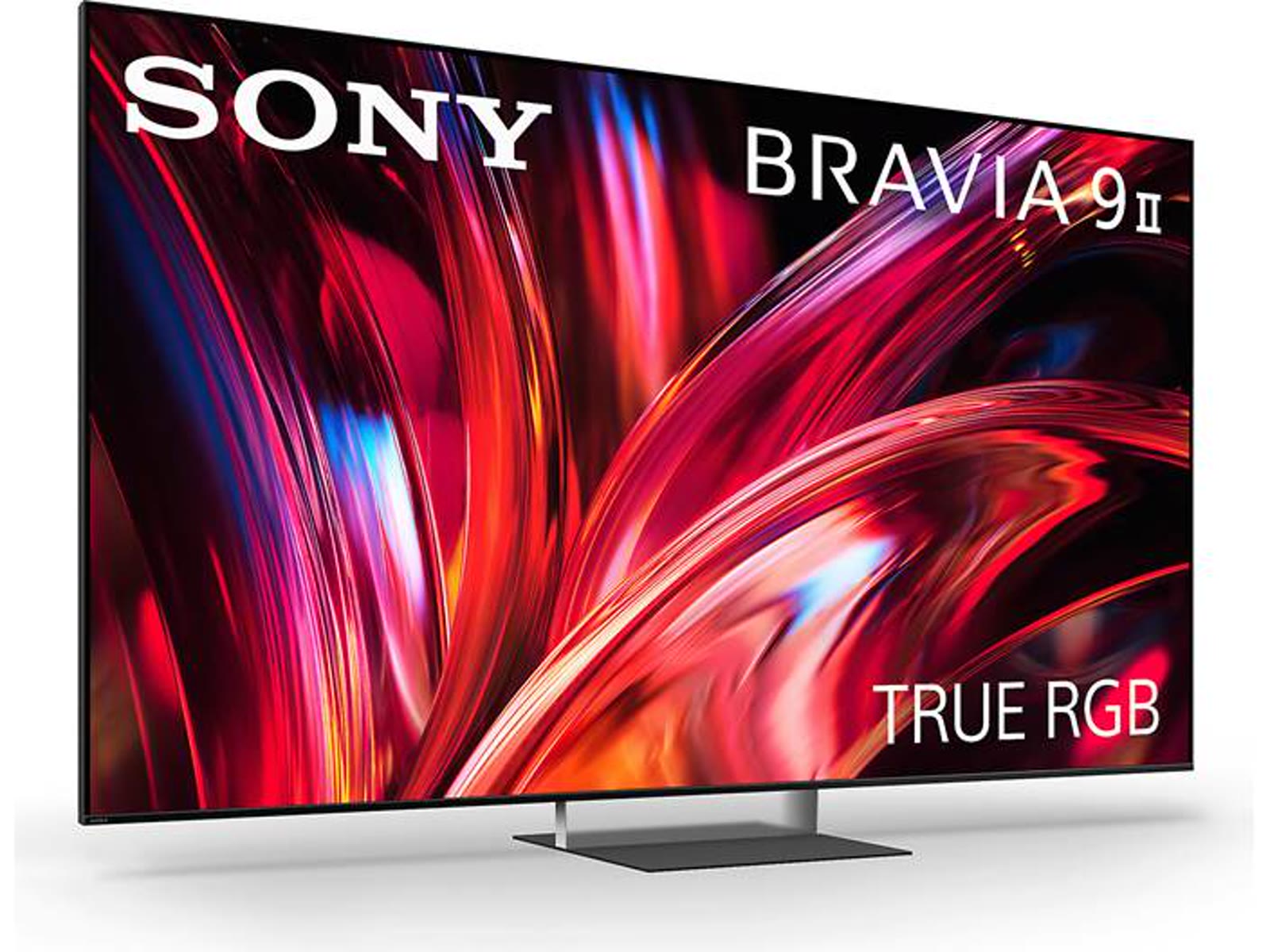
RGB Mini-LED removes the filter step. Instead of white LEDs, the backlight is made of independently controlled red, green, and blue LEDs — Hisense calls its implementation Chromagic; Sony calls its version True RGB, driven by "RGB Backlight Master Drive Pro." The backlight generates the color directly, zone by zone, which in principle means two things: wider color volume (no filter to wash out saturated reds and greens at high brightness) and finer local control (each zone's color and luminance addressed together, reducing the halo/blooming artifacts that are Mini-LED's visible weakness).
That's the theory, and the theory is sound. The question is the execution — and the price.
The 2026 lineup
Hisense UR9 — the first mainstream RGB Mini-LED. Launched April 2026 in 65/75/85/100", the UR9 is the set that dragged RGB Mini-LED out of the trade-show demo room: native 180Hz panel, a USB-C DisplayPort input that takes 4K/170Hz+ from a gaming PC (higher than its own HDMI 2.1 ports' 120Hz — a genuinely unusual, gamer-friendly choice), Devialet-tuned 4.1.2 audio, Google TV, and Dolby Vision 2 slated via future firmware. The creator buzz cites 5,000 nits and 110% BT.2020 — treat both as marketing until independently measured; the measured context available (KillBait) puts the 65" around 4,000 nits peak with up to 1,320 dimming zones on the 85".
The reviews are respectful and hedged. Ecoustics: "At its discounted price of $1,699 for the 65-inch model, the Hisense UR9 is a solid RGB MiniLED TV value... when you consider it costs substantially less than Samsung [R95H], it becomes a lot easier to overlook any shortcomings." Tom's Guide, after testing it: "OLED is safe: I tested the Hisense UR9 RGB Mini-LED... it's very good but falls short." What Hi-Fi, pitting the 65" UR9 (£2,999) against Sony's Bravia 8 II (£2,299): "the opening skirmish in a broader TV tech war" — price win to Sony in the UK.
The pricing is the whole story: $3,499.99 MSRP for the 65", street price $1,699–2,199 by September. "Do not pay MSRP" is the community's entire buying advice. Complaints are prosaic — bulky chassis, thick bezels, an overcomplicated pedestal assembly — not panel-level failures.
Sony Bravia 9 II — the videophile's RGB. Sony's first True RGB set (K-XR90M2 series: 65/75/85/115") pairs the RGB backlight with Sony's processing stack and, by all accounts, the best anti-glare coating in the business. Digital Trends called it "one of the best HDR TVs I've tested"; a Tom's Guide test dubbed it "the undisputed champion of RGB TVs" for pairing OLED-rivaling blacks with rich color.
The costs are Sony-shaped: $3,599.99 for the 65" (with social commenters calling regional pricing "just dumb"), native 120Hz rather than the 144–180Hz of the Chinese competition, and only two full-bandwidth HDMI 2.1 ports (ports 3 and 4) — a real constraint for multi-console gamers. The social consensus is blunt: at more than twice the price of an LG OLED, OLED loyalists see marketing hype, and AVForums classifieds had brand-new 75" units at ~20% under retail by July — soft demand already. The enthusiast debate isn't whether the 9 II is good; it's Bravia 8 II (QD-OLED) vs 9 II (Mini-LED): per-pixel blacks vs. RGB brightness, with the 8 II hundreds cheaper.
Samsung R95H — the flagship RGB. Samsung's top RGB Mini-LED exists primarily in our research as the UR9's price comparator — the set Ecoustics says the Hisense undercuts by enough to forgive its shortcomings. Detailed independent measurements of the R95H weren't in our research pass; treat specific claims about it as UNVERIFIED.
TCL's RGB play — the RM9L and the X11L halo. TCL's 2026 hierarchy tells the industry's direction of travel: the QM8L (SQD-Mini LED, conventional white backlight with quantum dots) sits below the new RM9L series, TCL's first RGB Mini-LED line — detailed specs and pricing for the RM9L were UNVERIFIED in our pass, but its position in the lineup is confirmed. Above everything sits the X11L halo: SQD-Mini LED at roughly $8,000 (85") to $10,000 (98"), which the community collectively admired and refused to buy — Tom's Guide's verdict doubled as the year's epitaph for halo pricing: the tech is real, "wait for SQD to come to cheaper TCL TV models."
What it's displacing
Worth remembering what RGB Mini-LED is actually killing: the conventional white-backlight Mini-LED flagship, which had a very good year in 2026 and is about to look like a stopgap. TCL's QM8L pairs claimed 6,000 nits and 4,000+ dimming zones with four full-bandwidth HDMI 2.1 ports and 144Hz gaming at a street price around $1,500 — the brightness-per-dollar champion on paper, though its owner signal is thin under a heavy sponsored-visibility layer and the predecessor QM8K carries real QA-lottery reports (screen-door effect, buzzing power supplies). Hisense's U8 (U8QG) is the reviewers' value pick at under $1,000 for 65" at street, with the social record split between genuine enthusiasm and genuine failure reports. These are excellent TVs. RGB doesn't make them bad — it makes their backlight architecture look like the previous generation, which, suddenly, it is. The practical effect for buyers: white-backlight flagships should get cheaper faster as RGB moves downmarket, which is good news whether or not you ever buy RGB.
One more caution before the scorecard: Dolby Vision 2 is still "via future firmware" on both the UR9 and the QM8L — pending, not shipped. First-generation hardware plus promised software is two gambles stacked. Buy what's in the box.
Is the hype justified?
Half. The honest scorecard:
What's real: RGB backlights genuinely widen color volume versus white-LED Mini-LED — the mechanism (no filter losses) is straightforward physics, and reviewers consistently describe richer, more stable color at high brightness than conventional Mini-LED manages. Local dimming control is finer. The UR9 at $1,699 is legitimately the brightest, most colorful 65" TV that money has ever bought at that price — the value equation is unprecedented even if the panel doesn't dethrone OLED.
What's marketing: the 5,000-nit and 110%-BT.2020 figures floating around creator content are brand-adjacent claims, not bench measurements; the measured context we have says ~4,000 nits on the 65" UR9 — still enormous, still not the claim. "OLED killer" framing collapses the moment you put the sets side by side in a dark room, which is exactly what Tom's Guide did. And the category's dirty secret: every RGB set worth buying is currently worth buying on discount, which tells you the launch prices were aspirational.
What matters most: the price curves. The UR9 lost half its MSRP in five months. The Bravia 9 II was already seeing "modest discounts" and 20%-under-retail private sales by summer. TCL and Hisense discount on steep, predictable curves — MSRP is a starting bid. Anyone who bought RGB Mini-LED at launch paid the early-adopter tax in full.
Who it's actually for
- The bright-room videophile: if your living room has windows and you want reference-grade HDR without babysitting an OLED, the Bravia 9 II is the current answer — at a discount, not at $3,599.
- The spec-sheet value hunter: the UR9 at $1,699–2,199 is the most technology per dollar in the 2026 TV market, full stop. Just know you're buying it for brightness and color, not for OLED blacks.
- The PC gamer: that DisplayPort-over-USB-C input on the UR9 is unique in the TV world — 4K/170Hz+ from a gaming PC with no adapter gymnastics.
- Not for: the dark-room movie purist (QD-OLED still wins there, cheaper), the buyer who pays MSRP (never, on these brands), or anyone who needs the tech to be mature — Dolby Vision 2 is still "via future firmware" on the UR9 and QM8L, and first-generation anything has teething risks.
The revolution, rated
RGB Mini-LED is the most meaningful backlight advance since Mini-LED itself — not because of the nit claims, but because it attacks Mini-LED's real weakness (color volume) instead of just adding zones. In five years, when this backlight sits in $1,000 TVs, 2026 will look like the year the filter died.
But revolutions are judged by what they displace, and nothing here displaces OLED in a dark room or value LED in a bedroom. What RGB Mini-LED displaces is the white-backlight flagship: the $2,500 conventional Mini-LED now looks like a stopgap. That's a real achievement wearing a silly "OLED killer" costume. Buy the tech on its actual merits — brightness, color, and the street price — and ignore the thumbnails.