The Projector Buying Guide: UST vs Long-Throw vs Portable in 2026
Prices and claims observed September 2026. Re-verify live before buying.
This site now covers 108 projectors — long-throw home-theater machines, ultra-short-throw laser TVs, portable minis, business workhorses, and gaming projectors. That's enough to answer the question buyers actually ask: not "which projector is best," but "which kind of projector is best for my room." Get the kind wrong and no model recommendation can save you. Get it right and the choice gets easy.
The three kinds, honestly
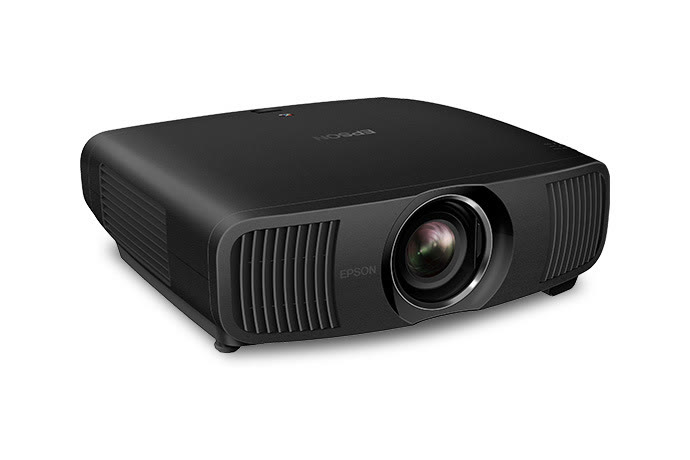
Long-throw home-theater projectors sit 10–15 feet from the screen and throw a 100–150" image. This is the dedicated-room category: JVC's D-ILA machines (the NZ500 is the current value king of native 4K laser), Sony's SXRD line (XW5100ES/XW6100ES), Epson's LS12000 and the QB1000, BenQ's HT-series. The physics favor them — a long throw means a simpler, brighter lens path and the best contrast-per-dollar in projection. If you have light control and a fixed screen, nothing else touches them.
UST (ultra-short-throw) laser projectors sit inches from the wall and throw 100–120". This is the living-room category: Hisense's PX3-PRO and the new PX4-PRO, Formovie Theater Premium and Cinema Edge, NexiGo's Aurora Pro, Samsung's Premiere line, Leica's Cine 1. They replace the TV — no ceiling mount, no cable runs, and with an ALR (ambient-light-rejecting) screen they work in moderate light. The tradeoff is contrast: the UST brightness-vs-contrast split is the category's defining argument. Hisense's PX3-PRO owners rave about punch in real rooms; the NexiGo Aurora Pro wins the contrast purists. You pick your side.
Portable/mini projectors go where you go: XGIMI's Elfin Flip line, the Halo+, Nebula's Capsule series, Dangbei's MP1 Max, JMGO's N1S family. Battery or USB-C power, auto-focus and keystone, speakers built in. The honest truth: they're convenience devices, not theater devices. The XGIMI Horizon 20 — technically a lifestyle portable at ~$1,300–1,500 — is the closest thing the projector world has to a consensus "just buy this" for people who want big-screen fun without the hobby. But no portable matches a fixed installation for contrast, and the brightness specs on budget portables are the most inflated numbers in all of consumer electronics. Treat any sub-$500 "4K 10,000 lumens" claim as fiction.
Gaming projectors (BenQ X3100i/X500i, Optoma UHZ66, ViewSonic X2-4K) and business/education projectors (Epson PowerLite, BenQ MH-series, ViewSonic PA-series) are the specialist wings. Gamers: input lag under 20ms and 1080p/240Hz or 4K/60Hz modes are the spec that matters; most home-theater projectors are too slow. Business buyers: brightness and warranty beat contrast every time, and the lamp-vs-laser math favors laser for total cost of ownership.
The decision tree
1. Do you have a light-controlled room and can you mount a projector 10+ feet from a fixed screen? Buy long-throw. A JVC NZ500 or Epson LS12000-class machine with a proper screen beats any UST on contrast, and the used market (JVC NX/NZ series, Sony XW5000ES) is deep. 2. Is this replacing a TV in a living room with windows? Buy UST + an ALR screen. The screen is not optional — it's half the system. Budget for it. 3. Do you need it to move — backyard movies, travel, dorm? Buy portable, and calibrate your expectations to the price. The Horizon 20 is the sweet spot; the sub-$300 tier is for kids' rooms. 4. Is this for gaming first? Check input lag specifically. The home-theater kings are often the worst gaming picks.
Traps
- Lumens inflation. ANSI lumens are measured; "LED lumens" and "light source lumens" are marketing. Compare ANSI to ANSI or don't compare.
- "4K" on budget portables. Many are 1080p panels with pixel-shifting or outright 720p with "4K support" (meaning they accept a 4K signal). The dossier for each model says which.
- The screen matters as much as the projector. A $2,000 projector on a wall looks worse than a $1,000 projector on a proper ALR screen in a lit room. For UST, the screen is mandatory, not an accessory.
- Throw distance math. Measure your room before buying. UST needs 8–16 inches of console depth; long-throw needs the mount point calculated from the throw ratio. Every dossier lists the relevant figures where verified.
- Laser vs lamp. Laser: 20,000+ hours, instant on/off, consistent brightness. Lamp: cheaper upfront, $200–400 replacement bulbs every 3,000–5,000 hours, dimming over time. For heavy use, laser wins on total cost.
Where to go next
- Browse [home-theater projectors](/library/theater-projectors/), [UST laser projectors](/library/ust-projectors/), [portable projectors](/library/portable-projectors/), and [gaming projectors](/library/gaming-projectors/) by category.
- Read [Projectors vs TVs](/guides/projectors-vs-tvs/) for the fundamental tradeoff.
- Every model page carries its validation tier — [A] announced items and UNVALIDATED budget portables are labeled, not hidden.