The Best Mini-LED TVs of 2026 — The Bright-Room Champions
Every Mini-LED TV is an illusionist. Behind the panel sit thousands of tiny LEDs, switching on and off in zones, trying desperately to pretend they aren't there. Most of the time it works. Then a white subtitle floats across a black letterbox bar at midnight, and the trick breaks — a soft gray halo bleeding around the letters. That halo has a name: blooming. It's the one defect OLED owners never think about, and it's the tax every TV on this list charges in exchange for being brighter, cheaper per inch, and unbothered by sunlight.
So buy with your eyes open, literally. If you watch with the curtains open, Mini-LED is the best TV technology you can buy. If you watch in the dark and the word "blooming" makes your jaw clench, look at OLED instead. Everything below is grounded in owner communities, reviewer measurements, and the social record as of September 2026 — including the parts the marketing would rather skip.
The blooming talk, up front
Where does blooming actually show up? In the dim-room moments: subtitles against black bars (a real buyer spent a January 2026 thread agonizing over subtitle blooming before buying a TCL), starfields in sci-fi, a bright cursor on a dark menu. QM7K owners swear by Filmmaker mode partly because Vivid makes blooming worse. It gets worse as zones get fewer — 256 zones stretched across a 100-inch Hisense is coarse dimming, honest math, not a scandal.
Who controls it best? Sony, by a distance the research keeps confirming. The XR Backlight Master Drive in the Bravia 7 earned the enthusiast press's default recommendation for two years on backlight control alone, and the Bravia 9 II's RGB Backlight Master Drive Pro had Digital Trends asking whether Sony had "finally created an LCD that can genuinely challenge OLED." Hisense's U8Q gets a What Hi-Fi? nod for "often great backlight control," and TCL's Halo Control System earned a "low blooming" from the Tom's Guide X11L reel. But the line nobody should blur: per-pixel OLED still wins for black levels and off-angle viewing, full stop. Hisense's U8Q has merely average off-axis performance; Samsung sells the QN90F partly on its wide viewing angle, which tells you the category's baseline isn't flattering.
The flagships
Sony Bravia 9 II — the reference, if money is no object
The best Mini-LED of 2026 on pure merit, and the worst value proposition in this guide. Sony's True RGB backlight pairs OLED-rivaling blacks with rich color and an anti-reflective coating Tom's Guide called elite; Digital Trends called it "one of the best HDR TVs I've tested." Then the 65" costs $3,599.99, the 85" $6,499.99, and a 115" runs $30,999 — and the social record is a price roasting: "At twice the price of my LG OLED i'll stick with my OLED." The spec gaps sting at this money: 120Hz native, only two HDMI ports do 4K/120, no HDR10+, and Sony publishes no nit figure or zone count — treat any number online as speculation. Sony's support reputation is the steadiest here — no warranty-complaint shadow, unlike TCL. Buy it for reference-grade bright-room HDR if price is secondary; everyone else should cross-shop the Bravia 8 II QD-OLED at roughly $1,100 less for the 65".
Samsung QN90F — the bright-room default
Samsung's 2025 flagship Neo QLED is the Mini-LED for people who won't buy OLED but refuse to close the blinds: the Glare Free matte-style screen is the reason to pick it over a TCL or Hisense, and the 165Hz VRR gaming suite is the most complete here. Tom's Guide called it "a great OLED alternative for bright rooms," and at 65" for $1,599 street (against a $2,499 MSRP), the Samsung premium is survivable — never pay MSRP. Now the asterisk, from real owners: an 85" owner reported pixelated, blurry live sports via YouTube TV, and Samsung support blamed his connection; some owners returned the set for an LG OLED. The owner community's workaround is an external streamer — budget a Roku or Fire TV Stick into the true cost. No Dolby Vision either (Samsung uses HDR10+ Adaptive).
TCL QM8L — the loudest spec sheet, the loudest ad campaign
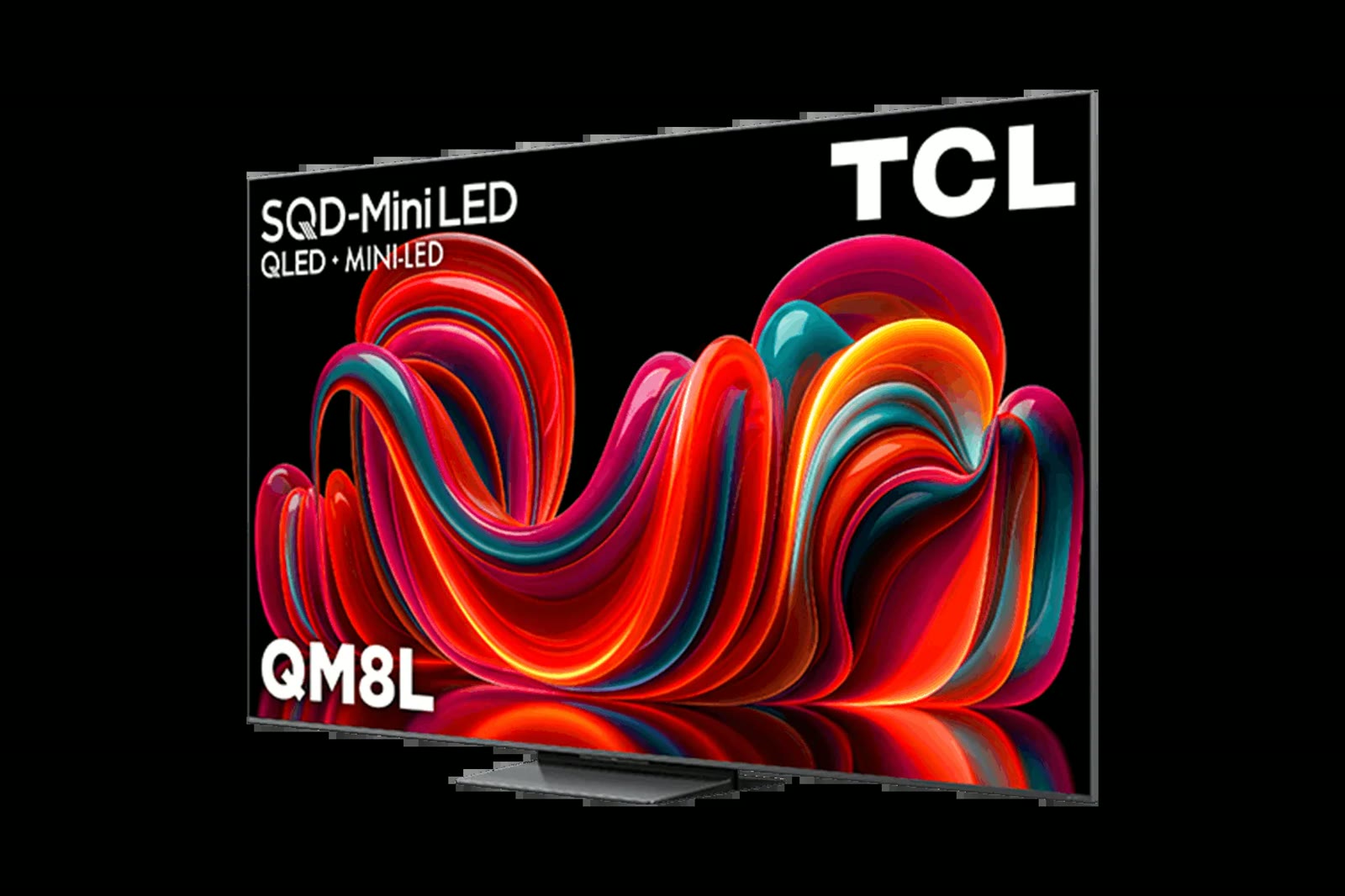
On paper, the 65" QM8L is the brightness-per-dollar champion of 2026: SQD Mini-LED trickled down from the flagship X11L, a claimed 6,000 nits, 4,000+ dimming zones, four full-bandwidth HDMI 2.1 ports at 4K/144Hz, and a 65" MSRP of $2,499.99 that collapsed to $1,499.99 within months of launch. Emphasis on on paper: the 6,000-nit figure is a brand claim with no independent measurement verified, and this was the most posted-about TV of 2026 on Instagram — a TCL-sponsored creator blitz. Underneath: the predecessor QM8K carries real QA-lottery reports — screen-door effect, "big blobs everywhere," a buzzing power supply — and TCL's own Instagram ad drew a warranty-denial complaint thread. The B&O audio the marketing leads with? One owner thread opened with "the Bang audio was a huge let down." A gamble TV: buy only at a steep discount, from a retailer with a painless return policy, with an extended protection plan budgeted in.
Hisense U8Q/U8QG — the lightning rod
The case for: a 2025 model still current as Hisense's U8-series flagship, 165Hz native, ~2,048 dimming zones on the 65", Dolby Vision and HDR10+, and a 65" that launched near $1,499.99 and now streets at $850–950, with open-box units from ~$495. TechRadar: "fantastically bright picture." T3: "bright OLED competitor." The case against: only three HDMI 2.1 ports, average off-axis viewing, a subwoofer that rattles on heavy bass — and the most detailed failure report in the research sweep, from a Threads owner whose set developed a giant purple screen spot, the "worst hdmi cec I've ever seen," and noticeable brightness decay after ~3 years: "They're cheap for a reason." No Hisense owner group exists to normalize any of this; sentiment splits between believers and burn victims. The honest buy: bright room, seats straight on, deep discount, easy returns, test the panel hard inside the return window. The 2-year warranty is your backstop.
TCL C8K / QM8K — the clearance flagship
Same TV, two names — C8K in Europe, QM8K in the US (the 2026 QM8L is a different line). TCL's 2025 flagship on clearance: up to 3,840 dimming zones, a claimed 5,000 nits on the 98", B&O-tuned audio, Google TV, 144Hz. The 65" was spotted at A$1,799 street against a A$2,999 RRP. The caveats are the TCL house pattern: warranty-denial threads under the brand's own ads, firmware that materially affects picture quality, and headline specs that are brand claims, not measurements. Buy it as a clearance flagship on price, not brand trust.
The mid-range
TCL QM7L — the one the owner community actually bought
The strongest 2026-mid-range owner signal in the batch, and it's not close. The TCL Owners Facebook group has real owners posting photos: filmmaker mode "very punchy with brightness an color an black levels are 🔥," a 65" owner happy with OTA broadcast TV out of the box. SQD Mini-LED, up to a claimed 3,000 nits, 800–2,176 zones by size, 144Hz — and the 98" hit Slickdeals at $2,497.99: 98 inches of Mini-LED for mid-size OLED money. Two honest shadows: one owner returned a 75" after a day over motion issues for an LG C6 — motion is the thing to test in your return window. And an 85" owner learned the Best Buy demo magic doesn't survive the trip home on a Dish Hopper 3 feed: source quality is the set's real variable. Update firmware on day one, buy with a strong return policy.
Sony Bravia 7 — the processing pick, discounted or not at all
The 2024 mid-range Mini-LED the enthusiast press kept recommending on one thing: Sony processing. XR Backlight Master Drive control and XR Clear Image upscaling that owners notice daily on mixed-quality streaming — the stuff a brighter panel can't fake. RTINGS kept it as its long-running top Mini-LED pick in its class. The trade-offs are permanent: native 120Hz, only two HDMI 2.1 ports with one shared with eARC (multi-console owners need a switch), and the Sony premium — which is why the community only buys this TV discounted. The 75" was observed at $1,798 against deep sustained discounting. One disclosure: direct owner social for the Bravia 7 didn't surface in this pass, so this is reviewer-and-forum evidence, thinner than the TCL owner threads. The right trade for movie and sports viewers feeding it mixed sources; the wrong one for spec-sheet shoppers.
Sony Bravia 5 — the set-and-forget Sony
For people who open the box, turn on the TV, and never touch the settings menu again. Sony's 2026 entry Mini-LED brings the Backlight Master Drive down from the flagship line and ships calibrated: Digit.in measured 913 nits on a 25% window and an average DeltaE of 2.8 — reference-grade accuracy with the protective film half-peeled. Sony's support is the best-regarded in this tier, worth real money when something breaks in year two. The cost of the badge: pricier than brighter TCL and Hisense alternatives, 120Hz, and 20W audio that wants a soundbar. It won't win a spec-sheet fight — it wins the fight on your couch, ten minutes in, with the remote still in the plastic.
Fire TV Omni QLED — the spare-room steal
Fifty inches for $269.99 — that's the review; the rest is footnotes. The refreshed Omni QLED is the budget TV that lives on the deals pages: record lows at $269.99 (August 2026) and $260 (September), a 5-star predecessor's goodwill behind it, and solid Fire TV execution — Alexa that works, Echo pairing for a free sound upgrade, and a nice Ambient art mode. The footnotes are load-bearing: 60Hz. No 120Hz gaming, modest HDR punch, Fire TV ads as the price of the ecosystem, and an MSRP ($479.99–$1,199.99) that's a fiction so the deal price looks heroic. Gamers are disqualified, full stop. If you can stretch, the Omni Mini-LED sibling is the better TV (TechRadar's honest footnote).
The budget tier
TCL QM7K — the forum-approved value king
The 2025 model the owner communities actually converged on. A $650-budget recommendation thread picked it; the TCL Owners group settled it — "The qm7k is the best value for sure. Is the 8 better? Yes. Worth the price difference I would say no" — and even Samsung's own owners group tells entry-level buyers to get a QM7K instead of a cheap Samsung. The 55" was $599.99 new at Best Buy in September 2026: QD-Mini LED, 144Hz, a claimed 3,000-nit class, B&O-tuned audio, Filmmaker mode owners swear by. What's wrong: poor warranty support is the most-cited TCL complaint, the family carries a panel-lottery reputation, only two HDMI ports are full 2.1, the tuner is ATSC 1.0 only. Buy from a retailer with a real return policy (the community names Costco), update firmware immediately, treat the built-in speakers as a placeholder. The best cheap TV money can buy, as long as the store will take it back.
Onn 55" Mini-LED 144Hz — the folk hero with an asterisk
Walmart's house brand shipped a 55" Mini-LED with a 144Hz panel and Roku OS for $348 at launch, $298 on Boxing Week — and the RedFlagDeals thread is full of genuinely impressed owners. "I wouldn't feel like I'm losing out if I watch a movie on this vs my Sony OLED. I know, crazy statement." The quirks are documented in the same thread: HDMI flickering at high refresh (fixed with certified HDMI 2.1 cables — budget them in), blurry text as a PC monitor, poor 24/60Hz motion, tricky mounting from unthreaded bottom VESA holes. Then the brand-level reality: Reddit calls Onn "the dimmest, blurriest 4K TVs on the planet" and "e-waste if purchased for long-term use"; Consumer Reports found Onn models inconsistent on HDR and sound. This model is the exception owners keep documenting — but the support structure is house-brand, with Walmart's return policy as the de facto warranty. A 2–3-year TV for a bedroom, dorm, or gaming den. Don't mistake a great panel for a great company behind it.
The halo you should admire from afar
The TCL X11L is TCL's 2026 flagship — and the community's cautionary tale about flagship pricing from a value brand (UNVERIFIED by owner evidence: almost no owners in this pass). Roughly $8,000 for 85", $10,000 for 98". Tom's Guide's verdict: exceptional brightness, low blooming, but "falls short of TCL's marketing claims" on color gamut — closing advice: "wait for SQD to come to cheaper TCL TV models." Nobody bought one. Admire it, then buy the trickle-down.
Mini-LED or OLED? The honest decision tree
Pick Mini-LED when: your room has windows you won't cover. Daytime sports are your religion — bright-room punch plus glare handling (Samsung's Glare Free screen, Sony's anti-reflective coating) is this technology's whole reason to exist. You're worried about burn-in — one Bravia 9 II buyer chose it over an LG G6 at the same money "cause I worry about glare issues, and burn in problems." You want enormous: 98" and 100" Mini-LEDs at $2,000–2,500 make a mockery of OLED pricing at those sizes.
Skip Mini-LED when: you're a dark-room cinephile and any blooming at all will ruin your night. Your seating is wide — off-angle quality on most of these is mediocre, and OLED holds its picture from the side of the room. You watch subtitled films in the dark and the letterbox halo will haunt you. The community said it best, unprompted: "for a controlled room/night time viewing, particularly movies and gaming, I'd still pick the OLED."
Two more, briefly
LG's 2026 QNED evo Mini LED ships with webOS 26 and five years of OS updates — but with zero owner community behind it in this pass: no brightness figures, no zone counts, no failure data. The software promises are UNVERIFIED by owner evidence. A leap of faith with a nice spec sheet. And the Hisense 100U76N is the big-screen value icon: 100 inches, FALD, 144Hz at Costco deal prices around $1,900–$2,200 with stacked warranty — but 256 zones on a 100" panel is coarse dimming, the upscaler trails a Sony at double the price, and Hisense's reliability shadow follows. Feed it 4K, stack the warranty.
The last word
Mini-LED in 2026 isn't a single decision; it's a personality test. The Sony buyer pays for processing and the right to never think about blooming. The Samsung buyer pays for the glare-free screen and brings their own streamer. The TCL buyer plays the panel lottery at a store with a good return desk and pockets the difference. The Hisense buyer runs a stress test during the return window — and wins, or doesn't. And the Onn buyer gets 90% of the experience for the price of a nice dinner out, then spends the savings on certified HDMI cables.
Know which one you are before you click buy. The halo will tell you.
Prices, owner quotes, and claims observed 2026-09-20; re-verify live before purchase — street prices in this category move fast, and clearance models may be out of stock in your size.